Crete is not like the other Greek islands. It is larger, more complex, more self-contained — a place with its own dialect, its own cuisine, its own history, and a culture that has been shaped by 5,000 years of civilisation. You could spend a month here and still feel that you have only begun.
Most visitors see the beaches. The beaches are excellent. But they are the beginning of Crete, not the heart of it.
The History
Crete is the birthplace of Europe's first advanced civilisation. The Minoans — who flourished here from around 2700 to 1450 BC — built palace complexes of extraordinary sophistication, developed Europe's first writing systems, and created an art of remarkable beauty and modernity.
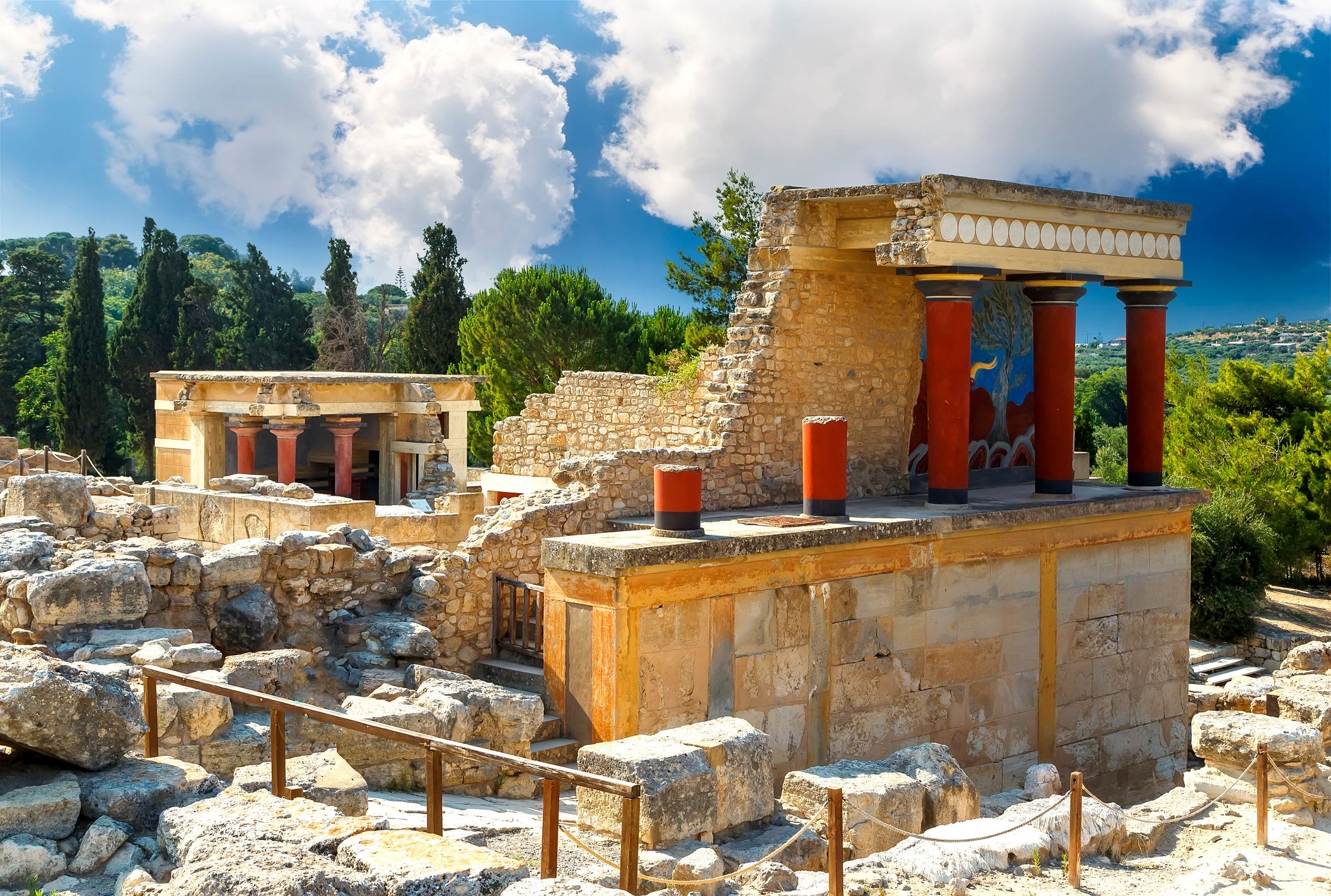
Knossos, near Heraklion, is the most important Minoan site and one of the most significant archaeological sites in the world. The palace complex — partially reconstructed by the archaeologist Arthur Evans in the early 20th century — gives a vivid sense of the scale and sophistication of Minoan civilisation. Visit with a private guide to understand what you are seeing.
Phaistos, on the south coast, is less reconstructed and, in our view, more atmospheric. The site sits on a hill above the Messara Plain, with views to the Libyan Sea. The Phaistos Disc — a clay disc covered in undeciphered symbols — was found here and is now in the Heraklion Archaeological Museum.
The Heraklion Archaeological Museum houses the finest collection of Minoan art in the world. The frescoes — the Bull-Leaper, the Ladies in Blue, the Prince of the Lilies — are among the most beautiful objects from the ancient world. Allow at least two hours.
The Mountains
Crete has three mountain ranges, and the interior of the island is a world apart from the coastal resorts.
The White Mountains (Lefka Ori) in the west rise to over 2,400 metres and are home to the Samaria Gorge — a 16-kilometre walk through one of Europe's longest gorges, from the plateau of Omalos to the Libyan Sea. The walk takes five to seven hours and is one of the great hiking experiences in Greece. The gorge is open from May to October.
The Lassithi Plateau in the east is a high plain ringed by mountains, dotted with windmills and traditional villages. The Diktaean Cave — where, according to myth, Zeus was born — is here, and the plateau itself is one of the most beautiful landscapes in Crete.
The Psiloritis range in the centre includes Mount Ida, the highest peak in Crete (2,456 metres) and, in mythology, the birthplace of Zeus. The villages on its slopes — Zaros, Anogia, Axos — are among the most traditional on the island.
The Villages
The mountain villages of Crete are a world away from the coastal resorts, and they are where the island's culture is most alive.
Anogia is famous for its music, its weaving, and its fierce independence. The village was twice destroyed by the Germans during the Second World War and twice rebuilt. The local men still wear traditional dress, and the music — the Cretan lyra and laouto — is played in the kafeneions in the evening.
Kritsa near Agios Nikolaos is one of the most beautiful villages in eastern Crete, with a Byzantine church (the Panagia Kera) containing some of the finest medieval frescoes in Greece.
Vamos in the Apokoronas region is a beautifully restored traditional village that has become a model for sustainable rural tourism. The local cooperative runs excellent accommodation and a restaurant serving traditional Cretan food.
The Food
Cretan cuisine is one of the great Mediterranean food cultures, and it is distinct from the rest of Greece. The island's food is rooted in the Minoan tradition of olive oil, wild herbs, and seasonal vegetables, and it has been shaped by centuries of Venetian, Ottoman, and Byzantine influence.
Olive oil is the foundation of everything. Crete produces some of the finest olive oil in the world, and it is used with a generosity that would alarm a nutritionist but delight anyone who loves food.
Dakos (barley rusk topped with tomato, olive oil, and mizithra cheese) is the quintessential Cretan starter — simple, perfect, and impossible to replicate outside the island.
Lamb and goat are the primary meats, slow-cooked with herbs and olive oil in ways that have not changed for centuries. The stifado (meat stew with onions and wine) and the kleftiko (lamb slow-cooked in a sealed pot) are among the best things you will eat in Greece.
Cheese is taken seriously in Crete. Graviera (a hard, nutty cheese), mizithra (a fresh whey cheese), and anthotyros (a soft, mild cheese) are all produced on the island and are worth seeking out at local markets.
The wine from Crete — particularly from the Heraklion and Sitia regions — is excellent and largely unknown outside Greece. The local grape varieties (Kotsifali, Mandilaria, Vidiano) produce wines of real character.
The Beaches
Crete's beaches deserve their reputation. The island has over 1,000 kilometres of coastline, and the variety is extraordinary.
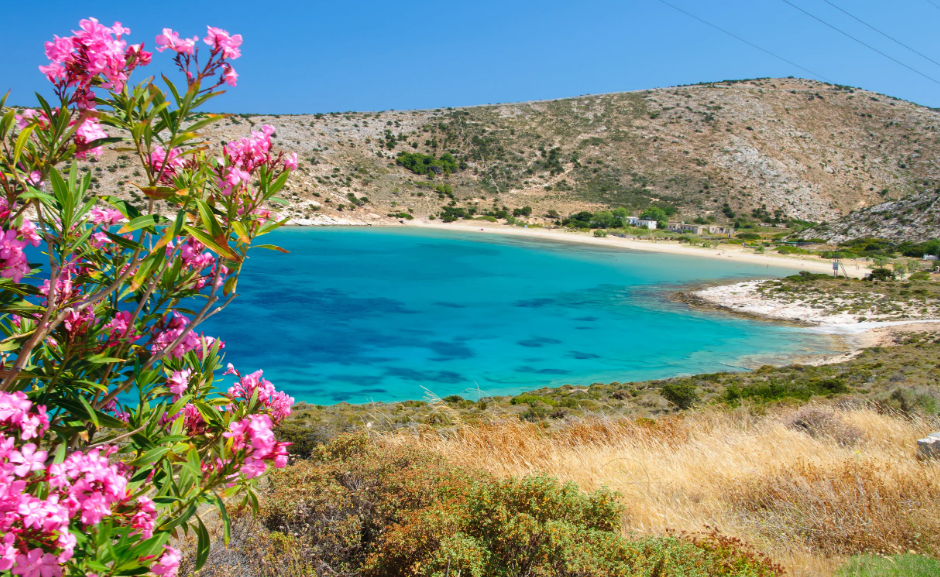
Elafonisi in the southwest is one of the most beautiful beaches in Greece — a lagoon of shallow turquoise water, pink-tinged sand, and a small island accessible on foot. It is busy in summer but worth it.
Balos in the northwest is accessible only by boat or a rough track, which keeps the numbers manageable. The lagoon — turquoise water, white sand, a small island — is extraordinary.
Preveli on the south coast is where a river meets the sea, creating a palm-fringed beach unlike anything else in Greece. The walk down from the monastery above adds to the sense of arrival.
Falasarna in the northwest is a long, wide beach of golden sand with clear water and reliable winds. It is one of the best beaches in Crete for those who want space.
How to Approach Crete
Crete rewards a different approach from the smaller Cycladic islands. A hire car is essential — the island is too large and too varied to explore without one. A week is the minimum for a meaningful experience; two weeks allows you to go deeper.
We recommend splitting time between the coast and the interior: a few nights in a coastal village, a few nights in a mountain village, and the flexibility to follow your interests wherever they lead.
Crete is one of the most rewarding destinations in Greece. We have been sending clients here for 25 years, and we know it well. Tell us what you are looking for.

Written by
The Greeko Team
Greeko has been crafting bespoke Greek holidays for over 25 years. Every article is written from genuine first-hand knowledge of the islands, the culture, and the experiences that make Greece extraordinary.